

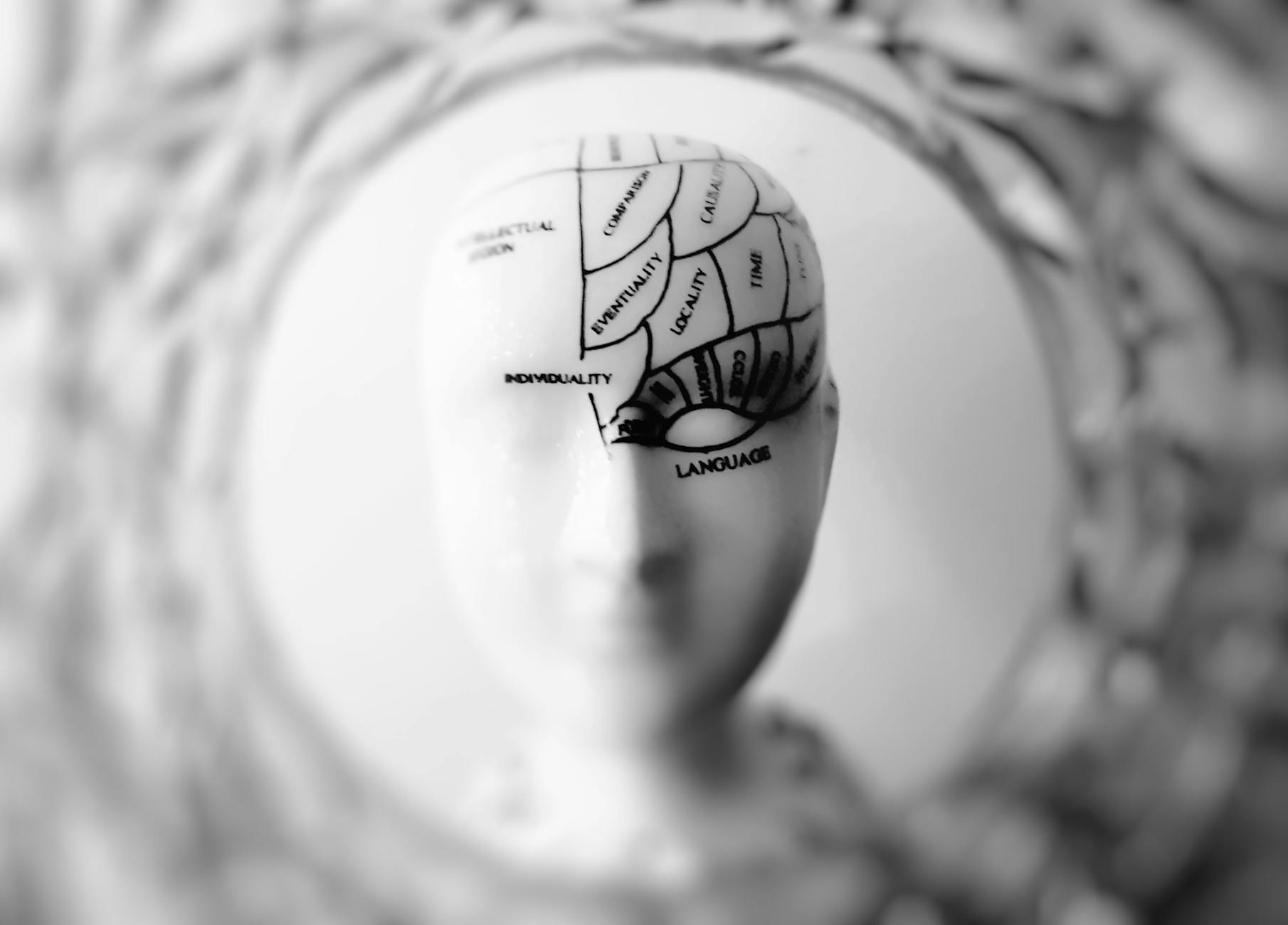
During the course of my journey as related to aphantasia, I’ve joined a couple of online groups where others share their experiences and questions. Recently, one of the questions posed by a member was on the order of, “Do you think finding out you have aphantasia at an older age was easier?” As I thought about that, it led me down a path of thinking about what if I had known earlier? What would have changed? Mostly, not much except…
I learned about aphantasia later in life in my early 60’s. I probably have not researched anything more in my life, except art of course. I taught art for 24 years (unlike more technical, science and math careers of many with aphantasia) and my last year of teaching was during the Covid years of 2020-2021 and so my focus was far removed from how my aphantasia affected my teaching. Much like when people find out as an artist, that I have a blind mind, and ask, “How can you be an artist?” I have even asked, “How did I even teach!?!” It’s all so mind boggling to try and understand concepts that seem unreal.
I could bring out some strong skill sets with my students for sure, but it would have been really interesting to know how I would have used that information with my students had I known earlier. One of my friends my close friends who is an art teacher, has started to adapt the learning based on knowing about the condition since my work. She has said to her students, “If you struggle creating a mental picture, it’s okay to use a photo reference.”
I think knowing about the variations of the mind’s eye, is a game changer in education because of how we ask students to recall information. Testing alone and the recall for that. As a person who probably also has SDAM (Severe Defiicient Autobiographical Memory syndrome) events and things I have said, can escape my memory easily. There’s stored there, I just can’t retrieve them. Can you imagine how a spelling test (which I was pretty good at) or recall of information where you can bring up a picture could affect testing for us? It becomes a bit of a different playing field and makes me question how people with visual memory pull up information since there is such a range of how people see things in their minds eye. Does the student who sees a moving image in their mind have difficulty focusing on a longer word because it moves too fast? And those who have aphantasia have to rely on other methods of learning.
I don’t know for sure, but I was never one for testing just based on recall. With the vast amounts of information at our immediate disposal, I think it would be good to consider the ability of the minds eye in how it is used when learning. But, then again, I didn’t need give tests to evaluate. I used rubrics to evaluate their understanding of the submitted work. But how do math teachers not test? I’ve rambled here but I think knowing about aphantasia and the variants of the minds eye, will in the future, give some options to figuring out how you learn best. I have a feeling that they are connected to some methods of learning as visual, demos, audio, kinetic, etc.
While I was working on my grant project, I figured out that drawing things out is part of my learning process and could be in lieu of having a mental image to recall. Is there a muscle memory attached to that learning and observation?
Link to an short but interesting article.


Leave a Reply